Best Waterproof Boots (2026)
One clear pick for work, hiking, winter, rain, and everyday wear, plus honest guidance on which type of waterproof boot you actually need.
“Waterproof boots” covers an enormous range of very different footwear, and the single most common buying mistake is getting the type wrong rather than the brand. A rubber chore boot is miserable on a long hike. A hiking boot is miserable in a barn. A safety-toe work boot is pointless weight if you’re commuting.
So this guide is organised by job, with one clear pick for each. Find the row that describes your week and start there.
One warning before you shop: check the specific model, not the brand’s reputation. Several famous boots that people assume are waterproof are not. The standard Blundstone Original is water-resistant leather. Red Wing’s Heritage moc toe is oil-tanned, not waterproof. Both are excellent boots - neither will keep your feet dry in sustained rain.
Which type do you actually need?
- Trails and hills → a waterproof hiking boot. Breathable membrane, lugged outsole, support under a pack.
- A jobsite → a waterproof work boot, with a safety toe only if required.
- Snow and freezing weather → an insulated winter boot. See our best waterproof winter boots, or best waterproof snow boots for deep snow.
- Rain and city puddles → a duck or rain boot. Style matters more than membrane tech here.
- Mud, livestock, standing water → a one-piece rubber or neoprene boot. Nothing else survives it.
- All day on hard floors → prioritise support and a welted construction over everything else.
How we picked
Each slot got a single winner chosen on genuine waterproof construction first - sealed membranes and one-piece rubber, not just a repellent finish - then on whether it does its specific job well, then on comfort, traction, and durability. Every pick is held to the same five-criteria scorecard below, and we screened out models with weak owner ratings or too few reviews to judge.
We also deliberately excluded boots that are widely believed to be waterproof but aren’t, however good they otherwise are.
Where to go next
For deeper coverage of individual categories, see our best waterproof work boots, best waterproof hiking boots, and best Timberland waterproof boots guides. If value is the priority, Kamik undercuts nearly everyone on warmth per dollar.
How we test waterproof shoes
Every pick is scored on the same five criteria and cross-checked against real owner feedback - so the ranking reflects how a shoe holds up, not its spec sheet.
Waterproofing
How well it seals - GORE-TEX, eVent, or a quality liner, with gusseted tongues and taped seams.
Traction
Outsole compound and lug pattern, and real grip on wet rock, gravel, and slick mud.
Support
Midsole stiffness, torsional rigidity, and stability on uneven ground and under a pack.
Comfort
Fit and width options, cushioning, break-in, and weight over long days.
Durability
Upper toughness, toe and heel protection, and how it holds up season after season.
Best overall
Merrell Moab 3 Mid Waterproof
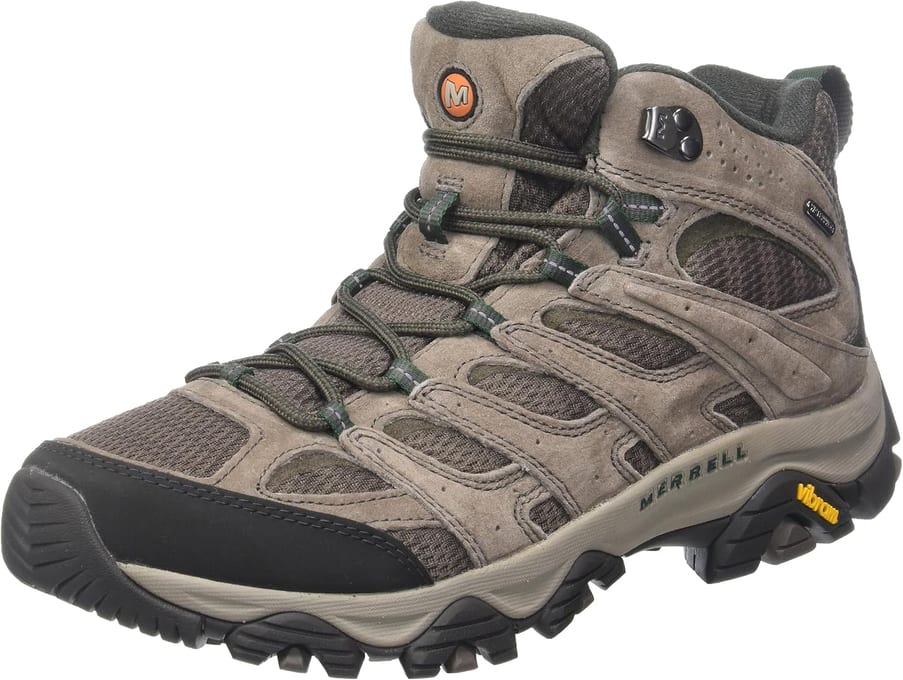
If you want one waterproof boot that does almost everything, it's this. Comfortable straight out of the box, waterproof through a sealed membrane, grippy enough for real trails, and priced sensibly - which is why it's among the best-selling boots of any kind. Not the most refined, but the most broadly useful.
Pros
- Comfortable with essentially no break-in
- Genuinely versatile trail-to-town
- Excellent value
Cons
- Heavier than modern lightweight hikers
- Membrane runs warm in summer
Best work boot
Timberland PRO Boondock 6" Composite Toe
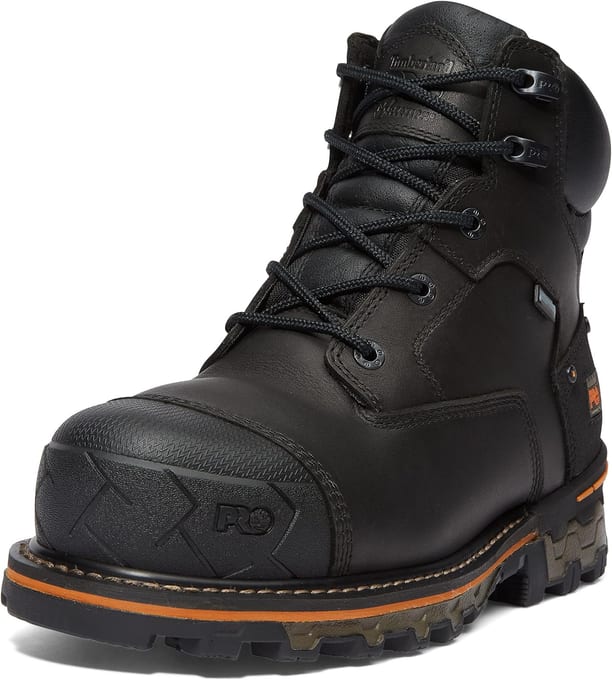
The jobsite answer. Waterproof leather over a breathable membrane, a lightweight composite safety toe that won't conduct cold or set off metal detectors, an anti-fatigue footbed for long shifts, and an outsole rated against heat, oil, slip, and abrasion. Tough, protective, and genuinely comfortable once broken in.
Pros
- Waterproof membrane plus sealed leather
- Light composite safety toe
- Slip-, oil- and heat-resistant outsole
Cons
- Stiff; needs a real break-in
- Heavy compared to athletic work shoes
Best hiking boot
KEEN Targhee III Mid Waterproof
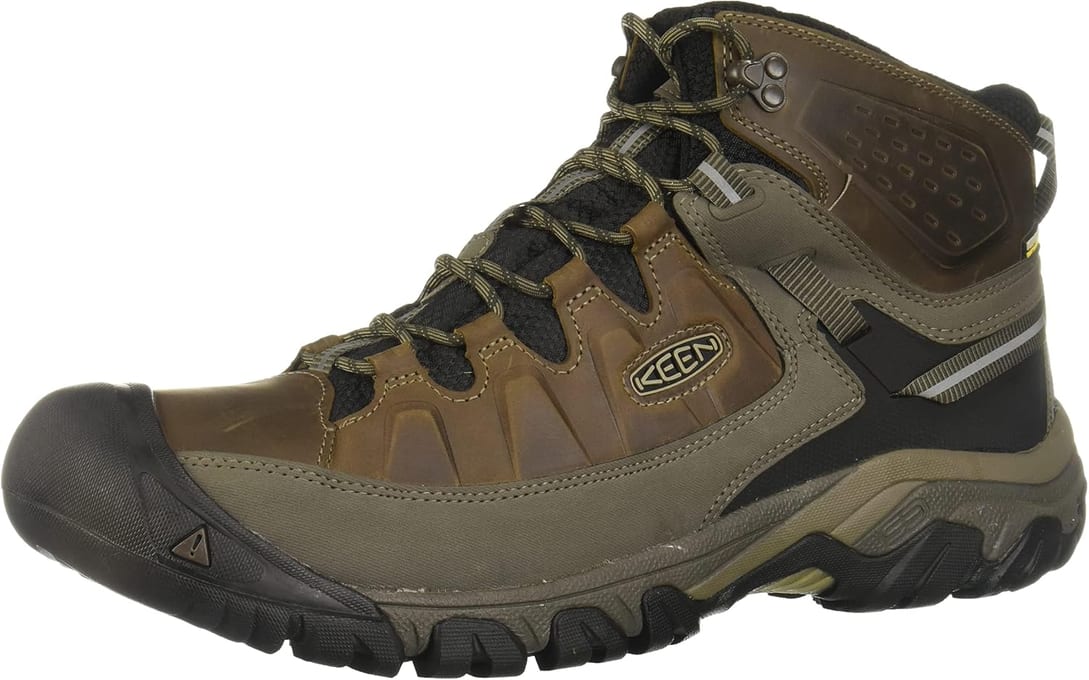
The default recommendation in waterproof hiking boots, and deservedly so. KEEN's membrane keeps water out, the outsole handles wet rock and loose dirt, and an external support shank steadies the foot under a pack. The famously roomy toe box is the real draw for anyone whose feet swell on long days.
Pros
- Roomy toe box; forgiving fit
- Confident all-terrain traction
- Supportive under a loaded pack
Cons
- Too wide for narrow feet
- Bulkier than lightweight hikers
Best winter boot
Columbia Bugaboot Celsius
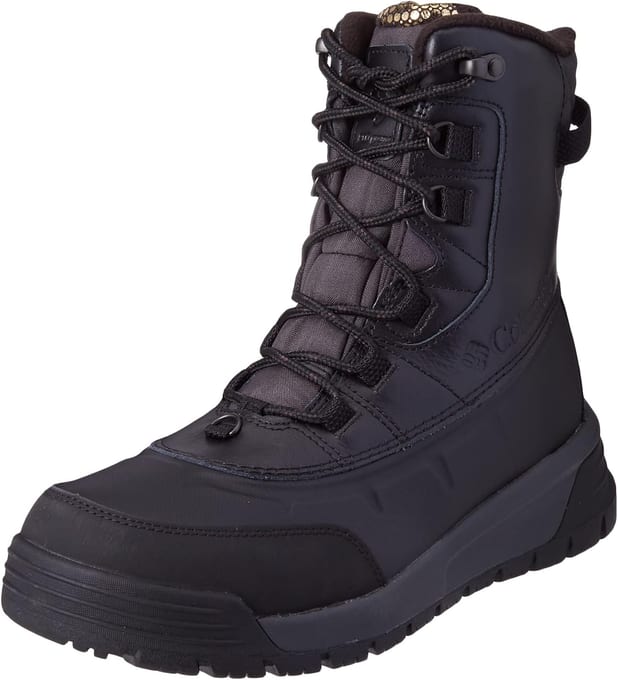
The insulated pick for anyone who needs one boot to survive winter without buying a full pac boot. A waterproof-breathable membrane, 200g of insulation, and a reflective lining that bounces body heat back at your foot - warm enough for freezing commutes while still walking like a normal boot.
Pros
- Warm without pac-boot bulk
- Waterproof-breathable membrane
- Reflective lining adds real warmth
Cons
- Not for deep snow or severe cold
- Long-term durability is mid-pack
Best for mud & chores
Muck Boot Chore Classic Mid
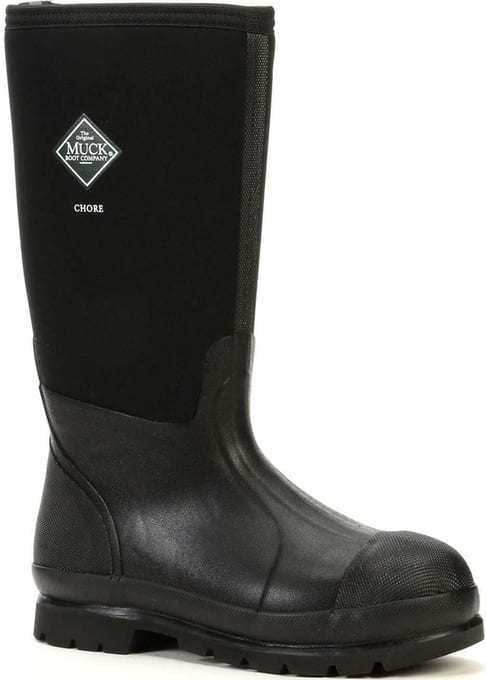
The perennial farm and barn choice. A one-piece rubber and neoprene build has no seams to fail, so it's completely impervious and rinses clean with a hose - the right tool for mud, manure, and standing water, where a stitched leather boot would be wet through and ruined.
Pros
- Seamless; totally waterproof
- Hoses clean in seconds
- Comfortable across a wide temperature range
Cons
- Neoprene breathes poorly
- Some recent durability complaints
Best rain boot
Sperry Saltwater Duck Boot
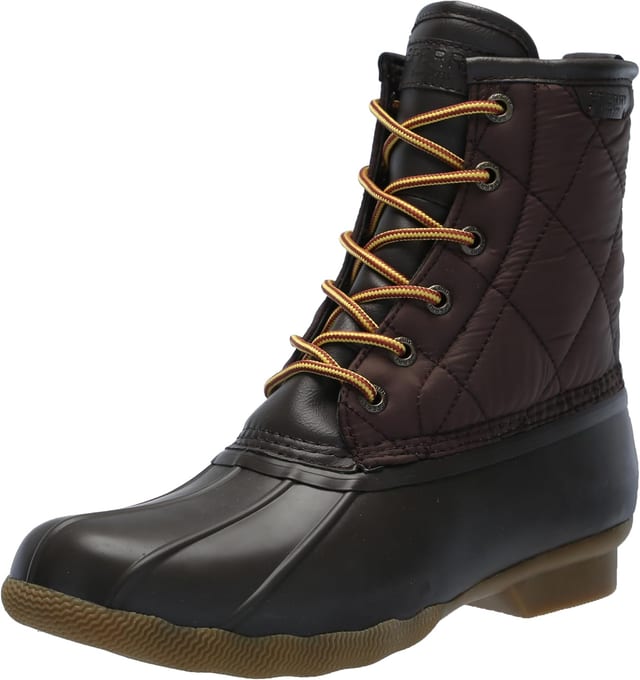
The duck-boot formula - waterproof rubber lower, quilted upper - done at a sane price. It's the classic wet-commute boot: rain, puddles, and slush bounce off the moulded shell, and it looks like normal footwear rather than wellies. Not a hiking or work boot, and not pretending to be.
Pros
- Rubber lower is impervious to puddles
- Wearable everyday styling
- Huge sales volume and following
Cons
- Limited arch support
- Traction is modest on ice
Best for standing all day
KEEN Utility Cincinnati 6" Waterproof
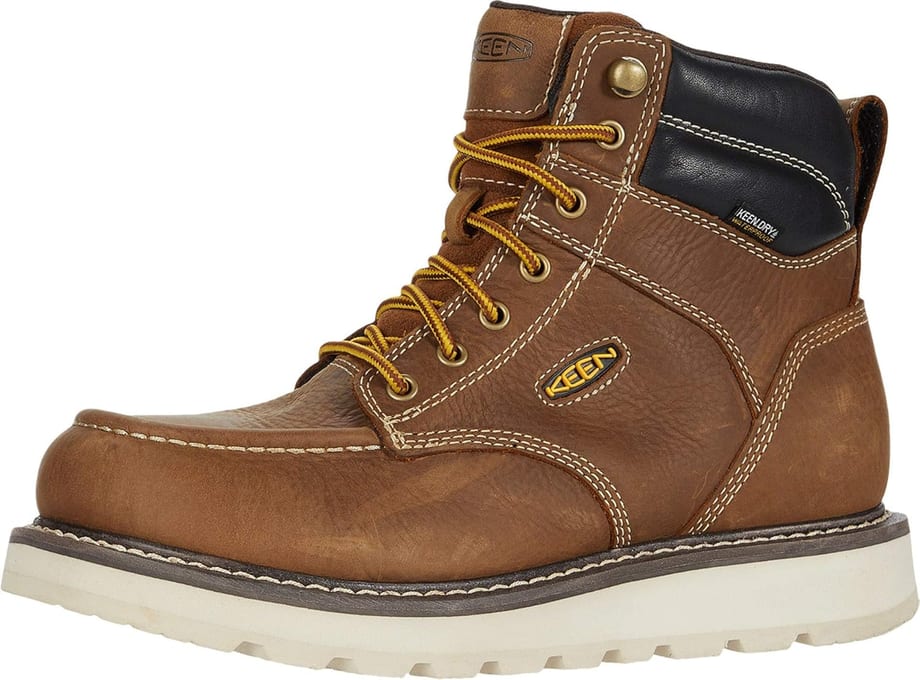
Built for the specific misery of concrete floors and twelve-hour shifts. A Goodyear welt, an air-infused midsole, and a genuinely supportive footbed do more for all-day comfort than cushioning alone. This is the soft-toe version, so it suits anyone who wants the comfort without a safety requirement.
Pros
- Outstanding all-day support
- Goodyear welt - resoleable
- Waterproof membrane; soft-toe option
Cons
- Heavy for its category
- Premium price
Best budget
Timberland White Ledge Mid Waterproof
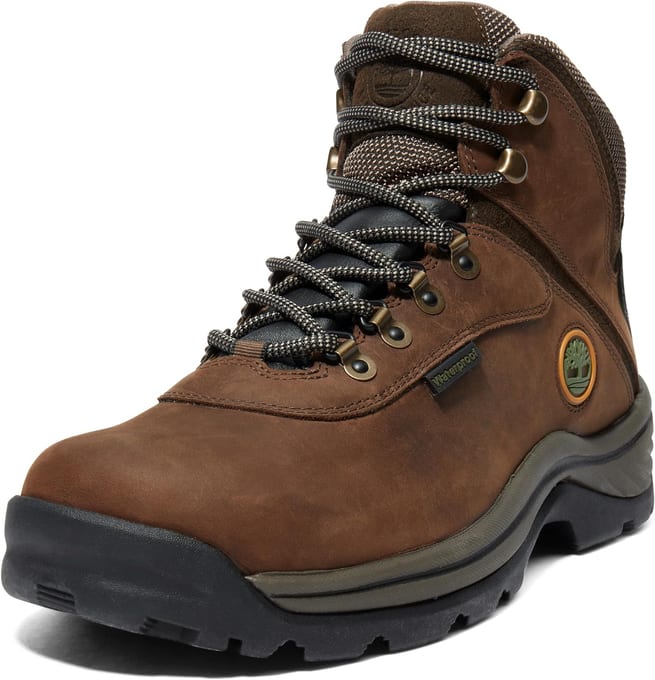
A long-running budget classic that keeps getting recommended because it keeps working. Seam-sealed waterproof leather, a padded collar, and a lugged outsole for a fraction of premium boot money. The leather is thinner and the ride firmer than pricier options, but the waterproofing is real.
Pros
- Genuine sealed waterproof leather
- Very low price
- Long-proven, widely owned
Cons
- Thinner leather than premium boots
- Firm underfoot; basic cushioning
Best for everyday style
Sorel Madson Chukka Waterproof
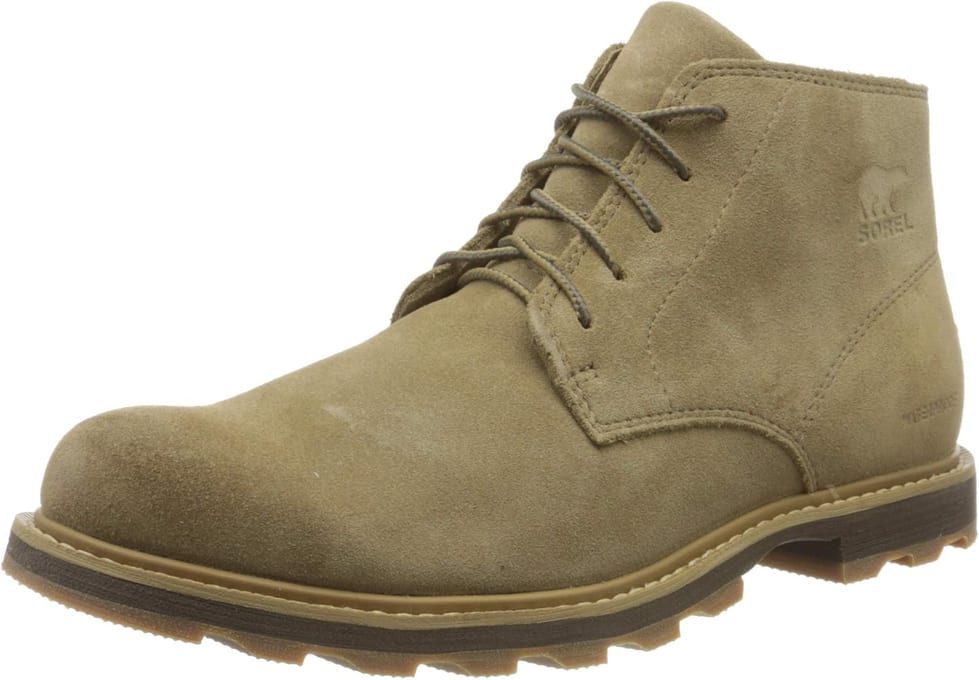
Proof that a waterproof boot doesn't have to look like gear. Seam-sealed waterproof leather in a clean chukka silhouette that works with trousers and passes in an office, with a moulded rubber outsole underneath for wet pavement. Style first, but the waterproofing is not cosmetic.
Pros
- Genuinely office-appropriate looks
- Seam-sealed waterproof leather
- Comfortable for city wear
Cons
- Not built for trails or worksites
- Limited traction on ice
Best pull-on
XTRATUF Legacy 15"
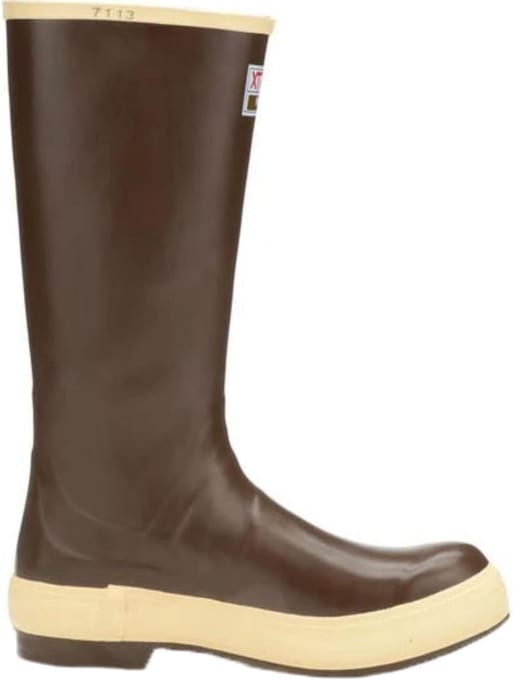
A cult favourite on commercial fishing boats, which tells you what you need to know about the waterproofing. Triple-dipped latex rubber makes it a knee-high boot with no seams anywhere, it pulls straight on, and the outsole is built to grip wet, slick decking. Overkill for a rainy walk - perfect for genuinely wet work.
Pros
- Completely seam-free rubber build
- Excellent grip on wet, slick surfaces
- Pulls on in seconds
Cons
- Runs large for some
- Too industrial for everyday wear
Also worth considering
Strong, well-reviewed shoes that just missed our ranked list - worth a look if the picks above aren't quite right for you.
- Danner Vicious 6" Composite Toe - A premium GORE-TEX-lined work boot with a composite safety toe and Danner's recraftable build - the step up from the Boondock if you want a boot you can resole rather than replace.
- Wolverine Overpass 10" Composite Toe - A taller wellington-style waterproof work boot with a flexible welt - the pick when you need coverage well above the ankle without stepping into rubber boots.
- Ariat Turbo Chelsea Waterproof Carbon Toe - A waterproof pull-on work boot with a carbon safety toe - no laces to deal with, and far more comfortable than most safety boots for long days.
- Thorogood American Heritage 1957 Series Waterproof - Union-made in the USA with a genuinely waterproof build - note that only the 1957 Series is waterproof, while the standard moc-toe line is water-resistant leather only.
- Blundstone Thermal 584 - The Chelsea boot that is actually waterproof - unlike the standard Blundstone Original, which is water-resistant only. Insulated and shearling-footbedded for cold, wet days.
Frequently asked questions
What's the difference between waterproof and water-resistant?
Water-resistant means treated leather or fabric that sheds a light shower and then wets through. Waterproof means a sealed system - a membrane bonded inside the boot, or a one-piece rubber shell - with taped or sealed seams. The distinction matters commercially: several famous boots people assume are waterproof, including the standard Blundstone Original and Red Wing's Heritage moc toe, are only water-resistant oil-tanned leather. Check the specific model, not the brand's reputation.
Membrane, treated leather, or rubber - which should I choose?
Match it to exposure. A membrane (GORE-TEX or a brand's own) breathes best and walks most naturally, so it's right for hiking and all-day wear. Sealed waterproof leather is durable and handsome but needs re-treating. A one-piece rubber or neoprene shell is completely impervious and hoses clean - unbeatable for mud, slush, and standing water, but it breathes poorly and your feet will sweat.
Do waterproof boots stop working over time?
The membrane rarely fails first - the outer layer does. Once leather or fabric is saturated it stops breathing, moisture condenses inside, and the boot feels like it's leaking when it isn't. Clean off mud and salt, let them dry away from direct heat, and re-apply a water-repellent treatment when water stops beading on the surface.
Are waterproof boots too hot for summer?
They run warmer than an unlined boot, yes - a membrane is a barrier in both directions. But 'waterproof' and 'insulated' are separate things: an uninsulated waterproof hiker is perfectly wearable in mild weather. Only add insulation if you specifically need warmth, because you can't take it out once it's built in.
Do I need a safety toe?
Only if your job requires it. Safety toes add weight and stiffness for no benefit in everyday or hiking use. If you do need one, composite is lighter, doesn't conduct cold or electricity, and passes metal detectors; steel is cheaper and slimmer for the same protection. Look for an ASTM rating rather than the phrase 'safety toe' alone.
How should waterproof boots fit?
Snug at the heel, roomy at the toes, with space for the socks you'll actually wear. Boots don't stretch the way shoes do, and a heel that slips will blister on descents and long shifts. Try them on late in the day when your feet have swollen slightly, and expect stiffer leather models to need a genuine break-in period.