Blundstone vs Dr. Martens (2026): Which Survives Wet?
Only some models of either are waterproof. Once you compare the sealed versions, warmth, grip and how you get them on decide it, not the leather.
Most of both ranges are not waterproof, so before comparing anything else, make sure you are comparing the sealed versions. Dr. Martens seals a handful of models on a DryWair membrane and leaves the rest as water-resistant leather on a stitched welt. Blundstone names exactly nine waterproof styles and calls everything else weatherproof.
Compare a waterproof Doc with a weatherproof Blundstone and you have learned nothing about the brands. Compare the sealed versions and three real differences show up, and none of them is the leather.
Warmth is the difference that usually decides it
The Blundstone Thermal is insulated. The waterproof 1460 is not.
That is the whole of it, and it is the reason most people end up with one rather than the other. A sealed Doc in February is a dry boot with a cold foot inside it, and no sock entirely fixes that. If you are shopping because of rain, it barely matters. If you are shopping because of winter, it decides the question before anything else gets a vote.
Laces versus pulling them on
This sounds like a style preference and is actually a fit question.
Eight eyelets let you tighten a Doc around your ankle, which is what stops your heel lifting on a hill or your foot sliding forward on a long walk. A Chelsea cannot do that: the elastic sets the volume and you live with it. If your ankle is the part that complains, laces win.
Going the other way, a pull-on boot you can be wearing in four seconds is a genuinely different daily object from one you lace. People who are in and out of the house all day tend to stop wearing the laced pair.
Neither one grips, and both brands know it
Worth being blunt about, because both have a reputation they do not deserve on wet ground. Blundstone’s standard Thermal sole is shallow. The classic Dr. Martens sole is slippery on wet smooth surfaces, which is why the brand sells the Trinity with a different tread at all.
If grip is your actual problem, the answer is not picking between these two. It is buying the version each brand made to fix it: the All-Terrain Thermal on the Blundstone side, or the Trinity in our waterproof Dr. Martens picks.
So which one
- Cold and wet, in and out all day: the Blundstone Thermal.
- Wet, on your feet for hours, want it to last: the waterproof 1460.
- Ice: neither as bought. Go to the All-Terrain or the Trinity.
- Mild and rainy, and you like the look: honestly, either. Buy the one you would rather put on, and treat the leather.
One note on the links above: the 1460 Waterproof is listed separately by sizing, and the women’s listing is the one we could link here without putting the same product on a third page. Our Dr. Martens roundup has the men’s.
How we test waterproof shoes
Every pick is scored on the same five criteria and cross-checked against real owner feedback - so the ranking reflects how a shoe holds up, not its spec sheet.
Waterproofing
How well it seals - GORE-TEX, eVent, or a quality liner, with gusseted tongues and taped seams.
Traction
Outsole compound and lug pattern, and real grip on wet rock, gravel, and slick mud.
Support
Midsole stiffness, torsional rigidity, and stability on uneven ground and under a pack.
Comfort
Fit and width options, cushioning, break-in, and weight over long days.
Durability
Upper toughness, toe and heel protection, and how it holds up season after season.
Warmer, and faster to get on
Blundstone 566 Thermal
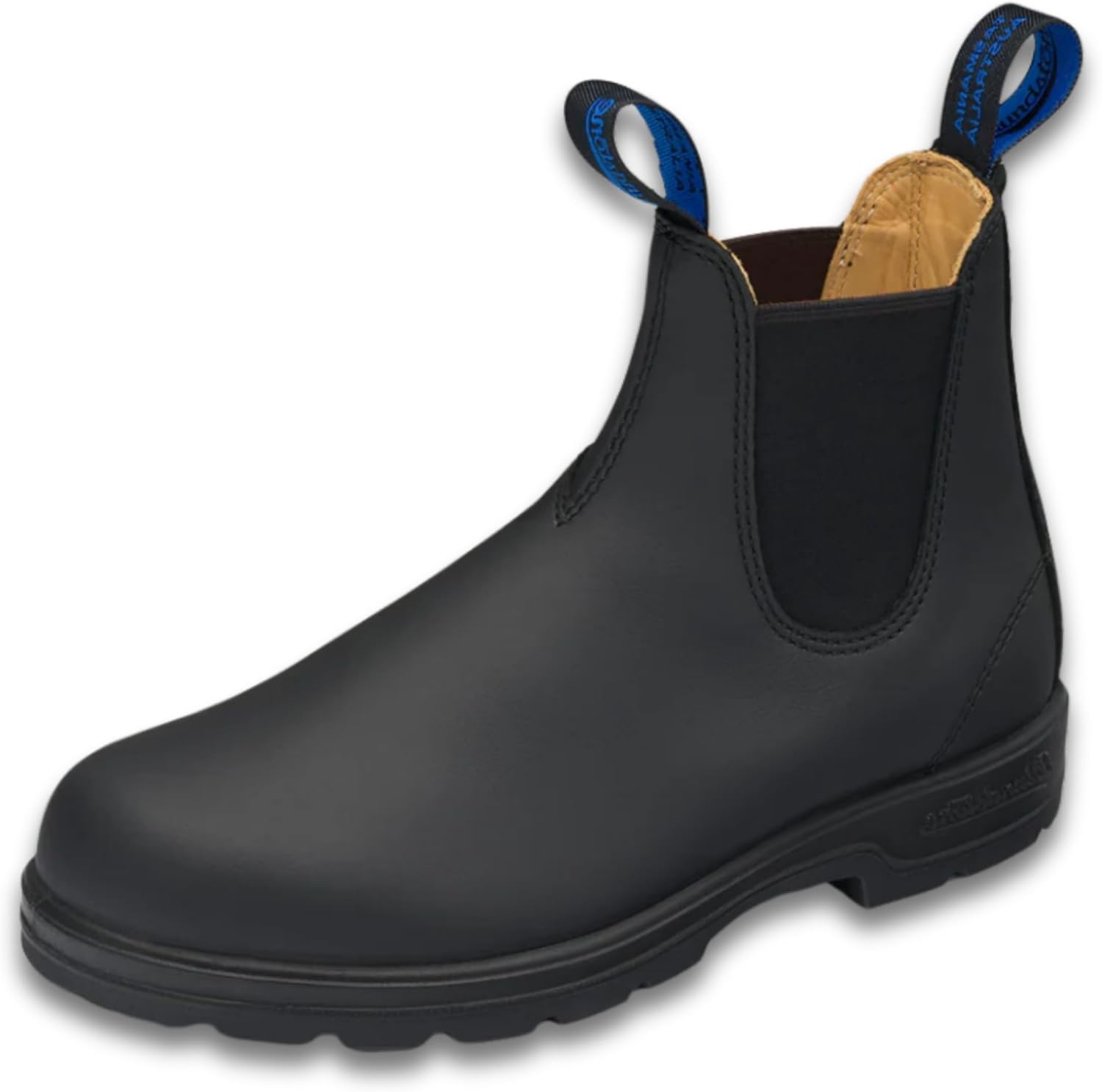
Pick this one if your problem is cold as well as wet. It is the only side of this comparison that is insulated: waterproof leather and sealed seams over Thinsulate and a shearling footbed, in a pull-on Chelsea you can be wearing in four seconds. That matters more than it sounds if you go in and out all day. The trade is underfoot and in the ankle: the standard Thermal sole is shallow and unconvincing on ice, and a pull-on boot gives you no way to tighten it around your ankle.
Pros
- Insulated as well as waterproof, which the Doc is not
- On and off without laces
- Sealed elastic and seams, no stitched sole seam to age
Cons
- Shallow tread, weak on ice
- No way to tighten the fit around the ankle
Tougher build, locks around the ankle
Dr. Martens 1460 Waterproof (Women's)
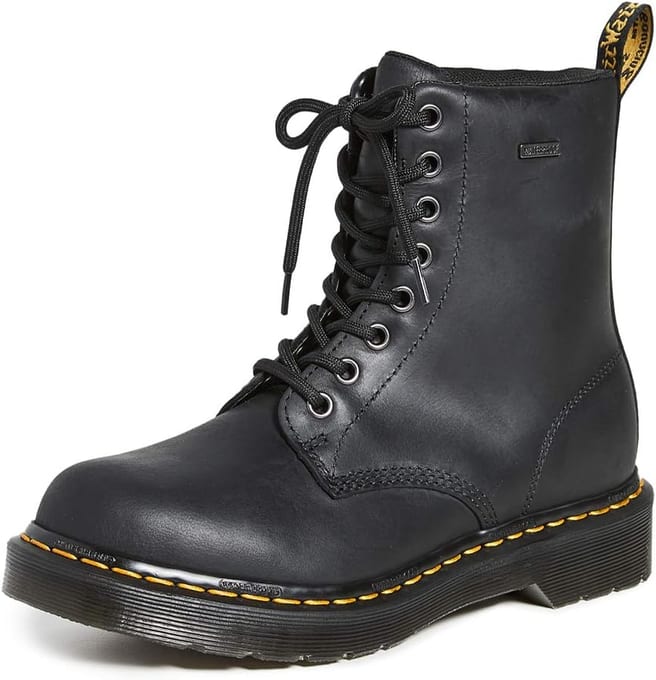
Pick this one if you want the boot to hold your foot and to be repairable. The sealed DryWair version of the 1460 keeps water out as well as the Blundstone does, and eight eyelets of lacing give you ankle lockdown a Chelsea cannot match on uneven ground or a long walk. It is also welted, so a worn sole is in principle a repair rather than a replacement. What you do not get is warmth: there is no insulation here, and the break-in is the long, unforgiving one Dr. Martens is known for.
Pros
- Lacing gives real ankle support
- Welted construction, in principle resoleable
- Sealed DryWair membrane keeps rain out
Cons
- No insulation at all, so cold in winter
- Classic sole is slippery on wet smooth ground
- Long, genuinely uncomfortable break-in
Frequently asked questions
Which is more waterproof, Blundstone or Dr. Martens?
Compare like for like and they are close. The Blundstone Thermal uses waterproof leather with latex-sealed seams and sealed elastic; the Dr. Martens 1460 Waterproof uses a sealed DryWair membrane. Both keep rain out. The catch is that most boots from both brands are not the sealed versions, so the model matters far more than the brand does.
Which is warmer?
The Blundstone Thermal, and it is not close. It is insulated with Thinsulate and lined over a shearling footbed. The waterproof Dr. Martens is sealed but has no insulation at all, so in cold weather it is a dry boot with a cold foot in it. If you are choosing for winter rather than rain, that single difference usually settles it.
Which has better grip in the wet?
Neither is good, which is worth knowing before you buy either. Blundstone's standard Thermal sole is low-profile and vague on ice, and the classic Dr. Martens sole is well known for being slippery on wet smooth surfaces. Both brands sell a fix: Blundstone's All-Terrain Thermal adds a deep tread, and the Dr. Martens Trinity swaps in a grippier GripWair sole.
Which lasts longer?
Both are built to last and they fail differently. Dr. Martens uses a welted construction that can in principle be resoled, which gives it the longer theoretical life. Blundstone's injection moulded sole cannot be resoled, but it also has no stitched sole seam to leak once the boot ages. For most people the deciding factor is not lifespan, it is whether they want to lace a boot every day.