Best Waterproof Snow Boots (2026)
Tall shafts, removable liners, and serious insulation compared for deep snow, shovelling, and standing out in severe cold, with temp ratings.
Deep snow asks different things of a boot than a cold sidewalk does. Height stops powder spilling in over the collar. A removable liner means you start tomorrow dry instead of damp. And enough insulation to keep you warm while standing still - not just while moving - is what separates a real snow boot from a winter boot that merely looks the part.
Every boot below is built for that harder job: deep snow, slush, and serious cold. If you mostly deal with cleared sidewalks and a slushy commute, you’ll be happier in something lighter from our best waterproof winter boots guide. Women’s buyers should also see our women’s waterproof snow boots picks, and for a view across every boot category there’s our best waterproof boots hub. Kamik, one of the best value brands in this space, gets its own Kamik boots guide.
How we picked
We weighted warmth when stationary most heavily, because that’s the scenario these boots exist for. Then waterproofing - favouring seamless rubber and neoprene shells over stitched leather for standing slush. Then shaft height and liner quality, since those determine whether snow stays out and whether the boot dries overnight. Traction was judged on cold-weather rubber compound, not lug depth alone.
We were deliberately sceptical of temperature ratings. Several boots here claim figures that independent testing doesn’t support, and where that gap exists we say so in the review rather than repeating the marketing number.
A note on those temperature claims
You’ll see snow boots advertised at -40°F, -60°F, even -100°F. There is no standard test behind any of these numbers and no third party checking them. A rating tells you roughly how one boot compares to another in the same brand’s lineup and very little else.
What actually determines whether your feet stay warm: how much you’re moving, whether the boot fits loosely enough to trap air, whether your socks are wool rather than cotton, and whether the liner started the day dry. Get those four right and a 200g boot outperforms a badly-fitted 400g one.
And if you were eyeing the clogs by the door, Crocs in snow fails on three counts at once.
How we test waterproof shoes
Every pick is scored on the same five criteria and cross-checked against real owner feedback - so the ranking reflects how a shoe holds up, not its spec sheet.
Waterproofing
How well it seals - GORE-TEX, eVent, or a quality liner, with gusseted tongues and taped seams.
Traction
Outsole compound and lug pattern, and real grip on wet rock, gravel, and slick mud.
Support
Midsole stiffness, torsional rigidity, and stability on uneven ground and under a pack.
Comfort
Fit and width options, cushioning, break-in, and weight over long days.
Durability
Upper toughness, toe and heel protection, and how it holds up season after season.
Warmest overall
Baffin Impact
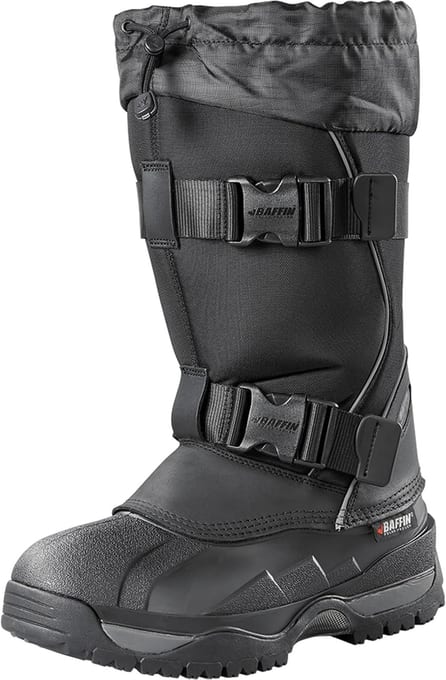
When the job is simply not having cold feet, nothing here comes close. Baffin's multi-layer removable liner and honeycomb air-pocket sole are built for stationary work in genuinely severe cold, and owners routinely report never feeling the temperature through them. The cost is weight and clumsiness - this is a boot for standing in, not walking in.
Pros
- Exceptional warmth in severe cold
- Thick multi-layer removable liner
- Built to take real abuse
Cons
- Very heavy and bulky
- Awkward for anything but standing or light work
Best classic pac boot
Sorel Caribou
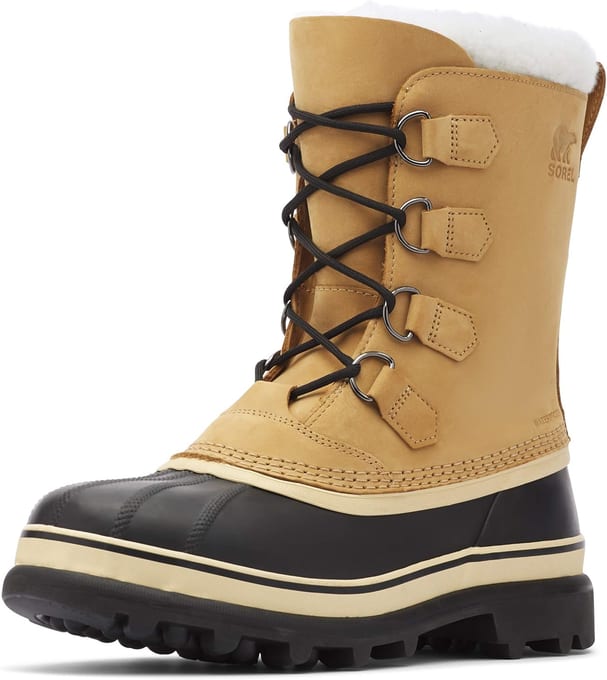
Fifty years in production and still the boot most people picture when you say snow boot. Waterproof leather over a moulded rubber shell, a 9mm removable felt liner, and a build that outlasts almost everything else here. It's the definitive driveway-and-shovel boot - clunky to walk in, but nearly indestructible.
Pros
- Proven, extremely durable build
- Warm removable felt liner
- Timeless design, easy on and off
Cons
- Clunky and loose to walk in
- Runs large - consider sizing down
Best waterproofing
Muck Arctic Sport Tall
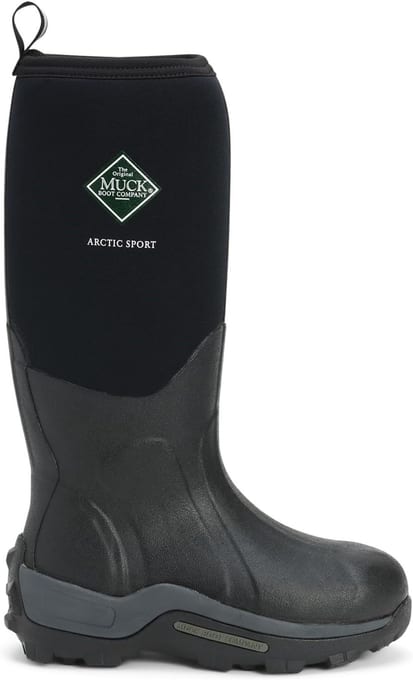
A seamless rubber-and-neoprene shell means there is nowhere for water to get in - the most genuinely waterproof boot in this guide. The 13-inch shaft handles slush, snowmelt, and standing water that would defeat a leather pac boot, which is why it's a perennial favourite for winter chores and ice fishing.
Pros
- Effectively impervious to water
- Tall shaft for slush and snowmelt
- Excellent grip in wet snow
Cons
- Neoprene breathes poorly
- Stretch collar can admit deep powder
Best for deep powder
Sorel Glacier XT
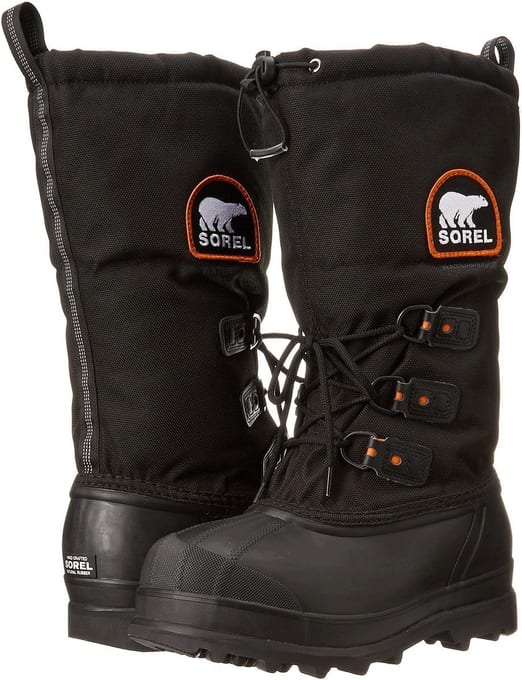
The Caribou's taller, warmer sibling, built for actually trudging through unbroken snow rather than standing in it. A thicker liner, a reflective inner lining, and a taller shaft keep powder out and heat in, and the outsole handles the mixed snow-and-ice underfoot that comes with real winter.
Pros
- Very tall shaft blocks deep powder
- Thick insulating liner system
- Confident traction in mixed snow
Cons
- Heavy for extended walking
- Overkill in mild winters
Best liner system
Baffin Control Max
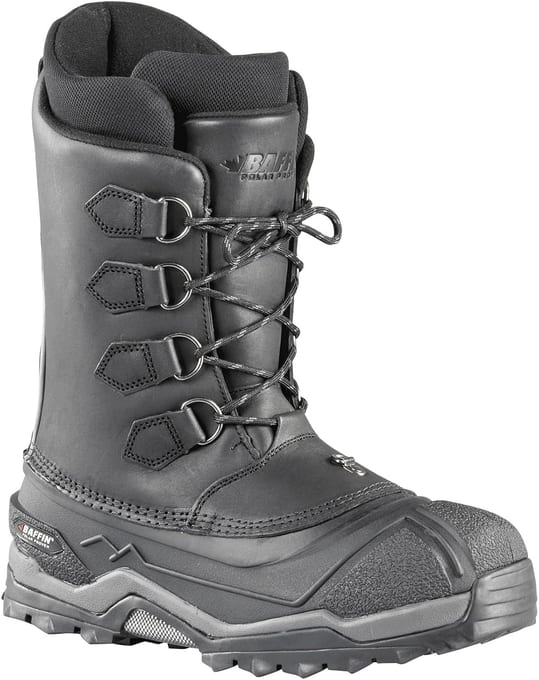
Baffin's multi-layer removable liner is the most sophisticated insulation package here - hollow-fibre layers plus a reflective membrane that bounces body heat back at your foot. The full-grain leather upper also makes it look considerably less industrial than the Impact, so it passes as a normal boot in town.
Pros
- Advanced multi-layer removable liner
- Leather upper looks less industrial
- Serious sub-zero performance
Cons
- Runs small - size up
- Heavy and expensive
Best pull-on
Bogs Classic High
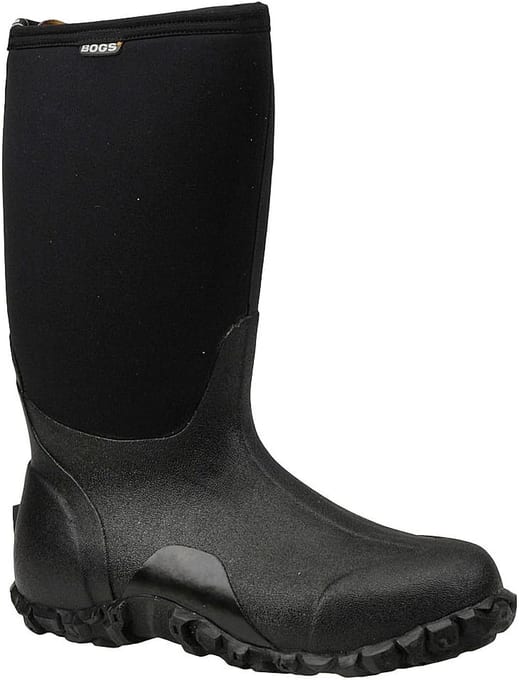
The easiest boot here to live with. A one-piece waterproof rubber shell with a four-way-stretch neoprene bootie means no laces, no seams, and no fuss - you step in and go. Genuinely comfortable for all-day wear around a property, though the headline cold rating is optimistic for standing still.
Pros
- Completely seamless and waterproof
- Slips on in seconds; grab handles
- Comfortable for all-day wear
Cons
- Cold rating is optimistic
- Little ankle support
Best for ice
Muck Arctic Ice Tall
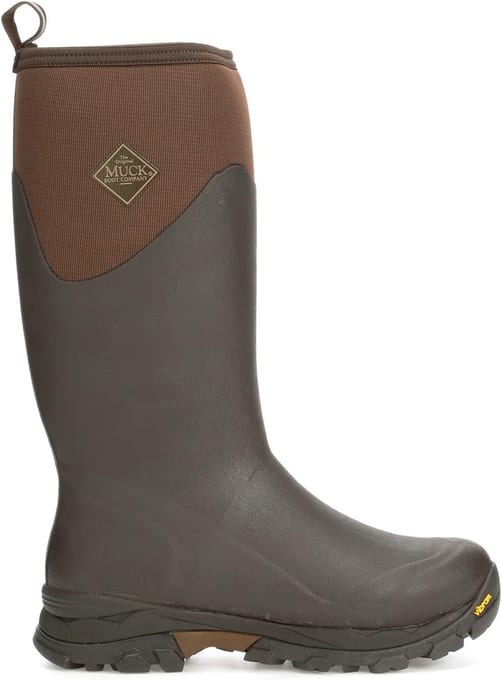
Muck's ice-specific outsole compound is the differentiator - it stays soft in deep cold and bites hard, glassy surfaces where standard winter rubber simply slides. Pair that with 8mm of neoprene and a tall shaft and you have the boot for frozen yards, boat ramps, and ice fishing.
Pros
- Outstanding grip on hard ice
- Very warm 8mm neoprene
- Fully waterproof construction
Cons
- Heavy underfoot
- Runs large; wear thick socks
Also worth considering
Strong, well-reviewed shoes that just missed our ranked list - worth a look if the picks above aren't quite right for you.
- Muck Arctic Pro - The warmest boot in Muck's neoprene line at 8mm, aimed at hunters and ice anglers who stand still for hours. Real-world testing suggests the headline rating is generous, but it's still a seriously warm, seam-free boot.
- Baffin Chloe - Baffin's women's-specific deep-snow boot, with the same removable multi-layer liner approach and sealed coverage that makes the men's line so warm.
- Northside Glacier Peak - A slightly lighter budget alternative to the Back Country with 200g Thinsulate - a reasonable pick if you want snow-boot height without the weight of a felt-lined pac boot.
Frequently asked questions
What makes a snow boot different from a regular winter boot?
Three things: height, liner, and insulation. Snow boots run tall - usually 10 inches or more - so powder can't spill over the collar. Most use a thick removable liner you can pull out to dry overnight, which matters enormously when you're out daily. And they carry far more insulation than an everyday winter boot. The trade-off is weight and walkability: these are built for deep snow and standing cold, not for covering miles.
Why does a removable liner matter so much?
Because a boot that's still damp inside is a cold boot. Feet sweat, and in a sealed boot that moisture has nowhere to go - trapped overnight, it robs you of warmth the next day. A removable liner pulls out to dry properly in hours instead of days, and it can be replaced when it packs down and loses loft, which effectively doubles the life of the boot.
Are temperature ratings on snow boots trustworthy?
Only loosely. There's no industry standard, no third-party certification, and every brand tests differently - which is why you'll see claims down to -100°F. A rating is a rough comparison tool within one brand's own line, not a promise. Independent testing regularly finds real-world comfort limits well short of the number on the box, especially when you're standing still rather than moving.
Do I need a rubber shell or is leather fine?
For deep snow and slush, a rubber or neoprene shell is the safer bet - there are simply no seams for water to find. Leather pac boots like the Sorel Caribou are warm and hard-wearing, but the seam where the leather meets the rubber lower is the first place they eventually wet out. If you're standing in snowmelt or slush for hours, go rubber.
How should snow boots fit?
Roomy. You want space for a thick wool sock plus a layer of still air, because air is what actually insulates. A snug boot compresses the liner and restricts circulation, and cold feet follow. Many snow boots run large by design to accommodate this - try them on with the liner in and the socks you'll wear, and expect a looser fit than a shoe.
Can I hike or walk long distances in snow boots?
Not comfortably. These are heavy, stiff, and loose-heeled by design - great for shovelling the drive, ice fishing, or waiting at a bus stop at -20°F, poor for a five-mile walk. If you want to cover ground in winter, an insulated winter hiking boot is a far better tool.