Best Rubber Waterproof Boots (2026)
One-piece rubber and neoprene boots that are impervious by construction, compared on comfort, warmth, and durability for farm, chores, and mud.
If keeping water out is the only thing that matters, nothing beats a rubber boot. There are no seams to leak, no membrane to delaminate, no stitching to wet through - the whole shell is one impervious piece. That’s why the mud, the manure, the snowmelt, and the standing water that ruin leather boots are simply a non-event in good rubber.
The boots below are the utility rubber boots: farm, chores, work, and wet outdoor jobs. If you want a rubber boot for rainy-day style - a tall fashion welly or a chelsea rain boot for the commute - see our best rainproof boots guide instead. For leather and membrane work boots, our best waterproof work boots guide is the better fit, and the best waterproof boots hub covers every category. Two of the brands below come up constantly against each other, so we compared them head to head in Bogs vs Muck.
How we picked
We prioritised waterproofing (all seamless, all genuinely impervious), then the things that separate a good rubber boot from a miserable one: comfort (a neoprene bootie and a real insole, not bare rubber), warmth where the boot claims it, traction on wet and muddy ground, and durability - because rubber quality is the difference between a boot that lasts years and one that cracks in a season. Every pick is held to the same five-criteria scorecard below.
Matching the boot to the job
- All-round farm & chores: the Muck Chore - the best balance of waterproofing, comfort, and toughness.
- Genuinely wet, all-day work: the XTRATUF Legacy - built for boat decks.
- Cold-weather chores: the Bogs Classic High for warmth, or Bogs Workman if you also need a safety toe.
- Wading / hunting: the tall LaCrosse Alphaburly Pro.
- On a budget: the Servus PVC boot or the HISEA neoprene chore boot.
- Garden & light wet jobs: the Sloggers.
A note on cost: rubber quality is where the money goes. A premium chore boot routinely outlasts three cheap pairs, so if you’ll wear them hard, buy once.
How we test waterproof shoes
Every pick is scored on the same five criteria and cross-checked against real owner feedback - so the ranking reflects how a shoe holds up, not its spec sheet.
Waterproofing
How well it seals - GORE-TEX, eVent, or a quality liner, with gusseted tongues and taped seams.
Traction
Outsole compound and lug pattern, and real grip on wet rock, gravel, and slick mud.
Support
Midsole stiffness, torsional rigidity, and stability on uneven ground and under a pack.
Comfort
Fit and width options, cushioning, break-in, and weight over long days.
Durability
Upper toughness, toe and heel protection, and how it holds up season after season.
Best overall
Muck Boot Chore Classic Mid
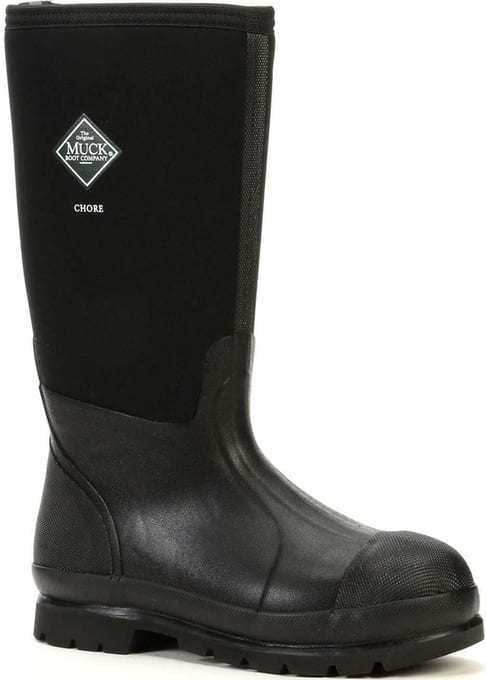
The default farm and chore boot, and the one to beat. A one-piece rubber shell over a 5mm neoprene bootie means it's completely impervious and hoses clean, while the neoprene makes it genuinely comfortable to wear all day - the combination that made Muck the category standard. Reinforced toe and heel take real abuse.
Pros
- Seamless; totally waterproof
- Comfortable neoprene lining
- Rinses clean; tough reinforcements
Cons
- Runs warm on mild days
- Narrow fit for some
Best for wet work
XTRATUF Legacy 15"
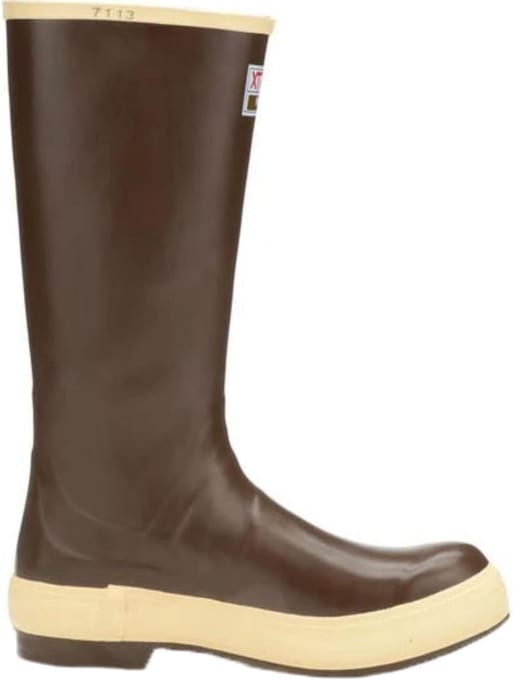
A cult favourite on commercial fishing boats, which tells you everything about the waterproofing. Triple-dipped latex rubber over a neoprene bootie makes a knee-high boot with no seams anywhere, and the outsole is engineered to grip wet, slick decking. Overbuilt for a muddy yard - exactly right for genuinely wet, all-day work.
Pros
- Triple-dipped, seam-free rubber
- Outstanding grip on wet surfaces
- Extremely durable
Cons
- Runs large for some
- Tall shaft is warm
Best insulated
Bogs Classic High
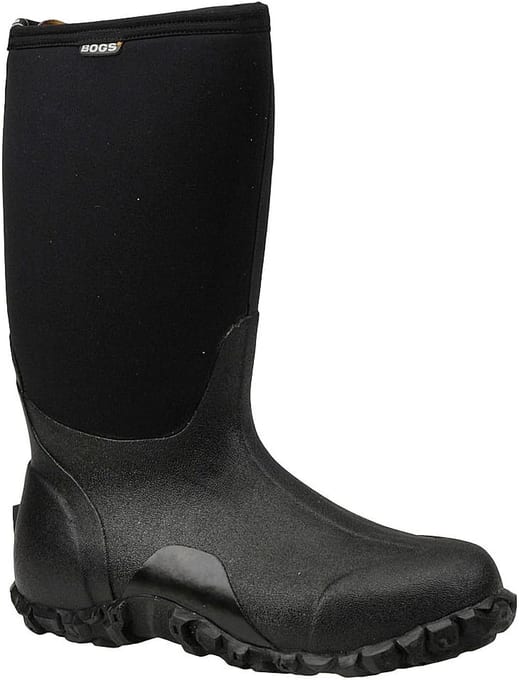
The warm one. A hand-lasted rubber shell over 7mm of Neo-Tech neoprene, rated for serious cold, with grab handles that make the tall shaft easy to pull on in gloves. One of the most comfortable rubber boots you can buy for all-day winter chores, if heavier than most.
Pros
- Very warm 7mm neoprene
- Comfortable all-day fit
- Easy-on grab handles
Cons
- Heavy
- Too warm for mild weather
Best tall / hunting
LaCrosse Alphaburly Pro 18"
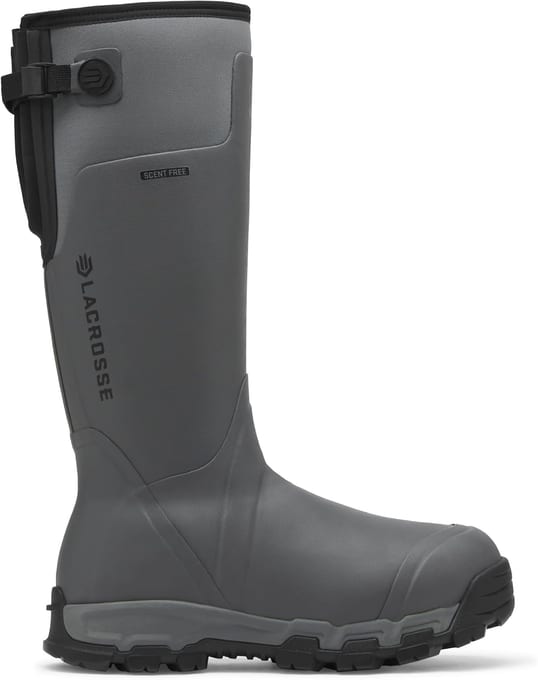
The pick when you need to wade. A hand-laid rubber shell over 3.5mm neoprene on an 18-inch shaft, with an adjustable calf and insulation options up to 1600g - built for hunters and anyone crossing water deeper than a puddle. Athletic and surprisingly light for a boot this tall.
Pros
- 18-inch shaft for deep water
- Adjustable calf; light for its height
- Insulation options to 1600g
Cons
- Premium price
- Some report seam wear under heavy use
Best classic
LaCrosse Grange 18"
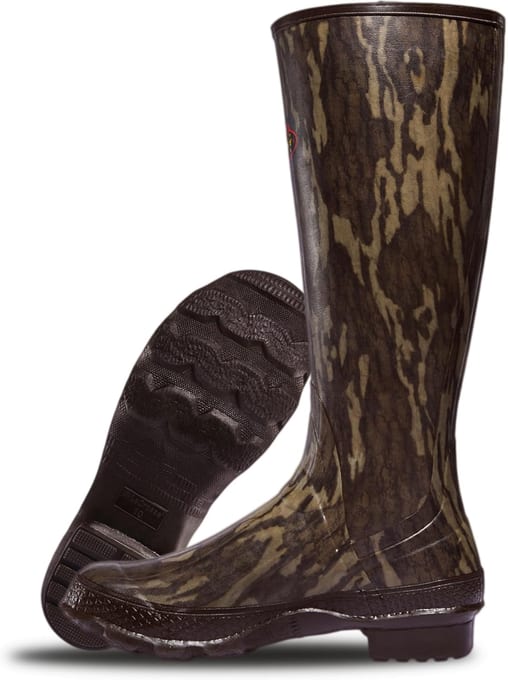
The no-nonsense barn boot. 100% ozone-resistant ZXT rubber, made in the USA, non-insulated, and built to be hosed off and abused for years. There's no neoprene comfort layer here - it's a pure, tough, tall rubber boot for mud, muck, and chores in mild weather, at a friendly price.
Pros
- Tough, ozone-resistant USA rubber
- Simple and very durable
- Affordable
Cons
- No insulation - cold in winter
- Firm; basic comfort
Best budget
Servus Comfort Technology 14"
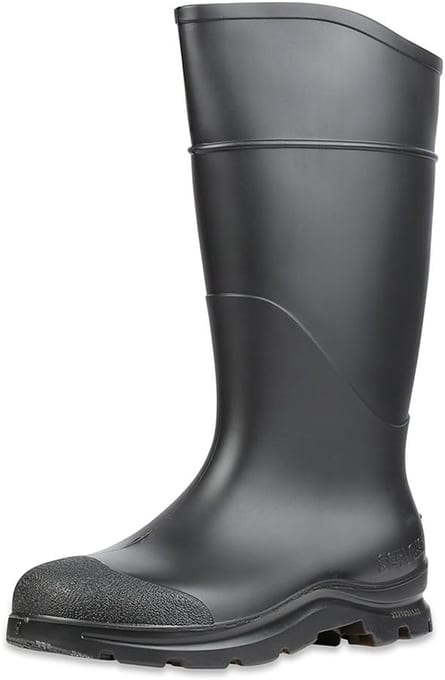
The value workhorse. A 100% waterproof PVC knee boot with a cushioned Comfort Technology footbed, for a fraction of what a neoprene chore boot costs. PVC is stiffer and less durable long-term than rubber-and-neoprene, but for occasional wet work or a spare pair by the back door, nothing touches the price.
Pros
- Very inexpensive
- Cushioned footbed for PVC
- Fully waterproof
Cons
- PVC stiffer than rubber
- Cold without a warm sock
Best safety toe
Bogs Workman
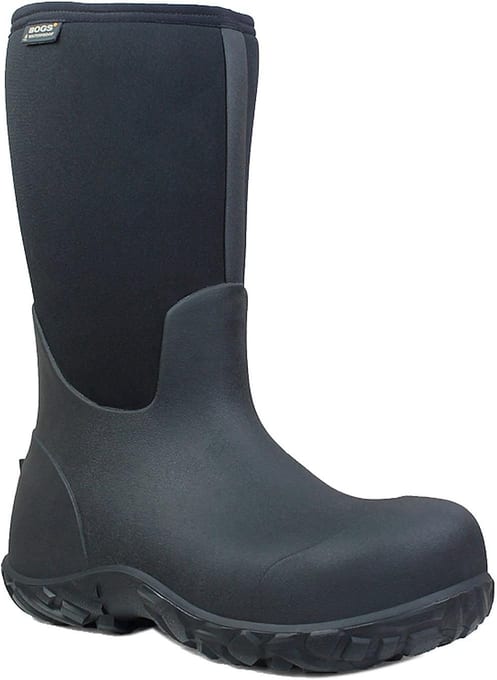
The jobsite rubber boot. Bogs' waterproof rubber-and-neoprene build with a composite safety toe and real insulation, on a tall 15-inch shaft - protection against both water and dropped loads where a leather work boot would soak through. Heavier and stiffer than the Classic, but that's the price of the safety rating.
Pros
- Composite safety toe
- Waterproof and insulated
- Tall protective shaft
Cons
- Heavy and stiff
- Less flexible for long walks
Best western style
Ariat Conquest Rubber Insulated
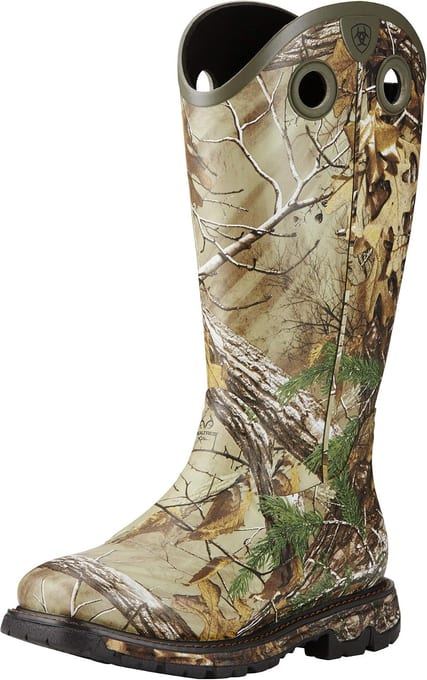
For anyone who wants a rubber chore boot that doesn't look like one. Ariat builds this on a square-toe western silhouette with a rubber-and-neoprene shell and real insulation, so it handles cold, wet ranch work while reading more like a cowboy boot than a welly. Notably better finished than most rubber boots.
Pros
- Western look; well finished
- Insulated for cold work
- Comfortable rubber-neoprene build
Cons
- Premium price
- Some report sole separation over time
Best for the garden
Sloggers Rain & Garden Boot (Women's)
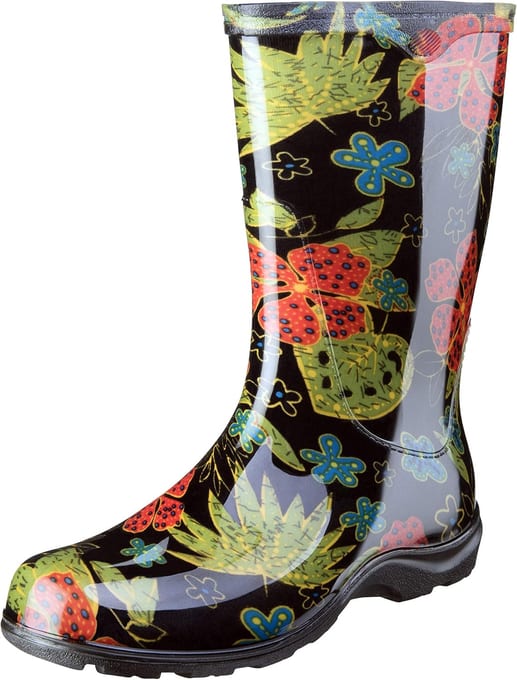
The friendly garden boot. A soft, lightweight waterproof shell in a mid-calf pull-on, with a comfortable insole and a huge range of prints, made in the USA and aimed at gardening and dog walks rather than heavy work.
Pros
- Light and comfortable
- Fun prints; USA-made
- Easy rinse-clean
Cons
- Not for heavy-duty work
- Short waterproof warranty
Best value chore boot
HISEA Rubber Neoprene Boot
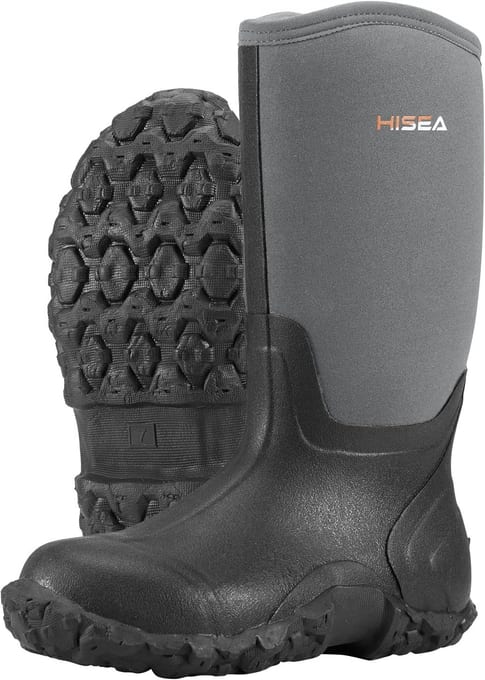
The Muck alternative that undercuts it by half. A rubber shell over a 5mm neoprene bootie with a seamless heel - the same basic recipe as the premium chore boots, at a value price. Quality control is less consistent than the big brands, but for occasional chores the performance-per-dollar is hard to argue with.
Pros
- Rubber + 5mm neoprene at a low price
- Comfortable seamless build
- Good warmth for the money
Cons
- Quality-control varies
- Less proven long-term durability
Also worth considering
Strong, well-reviewed shoes that just missed our ranked list - worth a look if the picks above aren't quite right for you.
- Muck Boot Wetland - The tall waterfowl-and-chore classic - a 16-inch rubber-and-5mm-neoprene boot with a wide comfort range, beloved for all-purpose farm work. A step up in height from the Chore for deeper mud and water.
- XTRATUF Ankle Deck Boot - A 6-inch, lighter, more flexible XTRATUF for quick wet jobs and deck work - the same triple-dipped rubber without the tall shaft, when a knee boot is more than you need.
- Bogs Bozeman Mid - A lower-profile insulated Bogs for snow-removal and quick winter chores - 5mm Neo-Tech neoprene in a mid height that's easier to live with than a tall boot.
- TIDEWE Rubber Neoprene Boot - Another strong budget chore boot with 6mm neoprene and a steel-shank option - good price-to-performance for hunting and farm work, with the usual value-brand durability caveats.
Frequently asked questions
Why are rubber boots the most waterproof kind?
Because there is nothing to fail. A one-piece rubber or rubber-and-neoprene boot has no seams, no stitching, and no membrane that can delaminate, so it is waterproof by construction rather than by treatment and stays that way for the life of the boot.
Rubber or neoprene - what's the difference?
The shell is rubber; neoprene is the flexible, insulating bootie many are lined with. A plain rubber boot is tough and cheap but cold and stiff. A neoprene-lined one is warmer, softer, and far more comfortable for long wear.
Are rubber boots warm enough for winter?
The insulated ones are - some are rated to -40°F. Neoprene itself insulates, and cold-weather models add thermal foam on top. A non-insulated rubber boot, though, is genuinely cold in winter; it's built for mud and wet, not for standing in snow. Check for an insulation or temperature rating if you'll wear them in the cold.
Do rubber boots last, or do they crack?
Quality matters more here than in almost any other boot. Good rubber compounds flex for years; cheap ones dry out and crack at the flex points. Store them out of direct sun and heat, and rinse off manure and chemicals. A premium chore boot outlasts three budget pairs.
How should rubber boots fit?
Looser than a shoe, with room for a thick sock and a little air, which is what keeps feet warm. Most run large or true, so a half size down is common if you are between sizes.
Can I wear rubber boots all day?
The comfort-lined ones, yes - that's what the neoprene bootie and a cushioned insole are for, and farmers and dock workers wear them through full shifts. A bare rubber boot with a thin insole gets tiring on hard ground, so if you're on your feet all day, prioritise a neoprene lining and consider an aftermarket insole.