Bogs vs Muck Boots (2026): Which Brand Should You Buy?
Bogs and Muck both make genuinely waterproof rubber boots, but they solve different problems. How they differ on comfort, warmth, fit, and price.
Bogs and Muck get compared constantly because they look like the same product, and on the important thing they are: both are hand-laid rubber over a neoprene core, both are waterproof by construction rather than by treatment, and neither will ever leak through the sole. Waterproofing is not the deciding factor here.
The real difference is the collar. Muck builds a soft, stretch-fit neoprene bootie that hugs your calf, and Bogs builds a firmer shell with two pull handles. Almost everything else follows from that one choice.
The trade, in one paragraph
Muck’s soft collar is why its boots are more comfortable over hours and seal better against cold water, and it is also why they slump when you step out of them and take more effort to pull back on. Bogs’ firm shell is why its boots stand up on their own and go on in one motion, and also why they give less across the instep. Neither is a flaw. They are the same decision made in opposite directions.
Which one to buy
Buy Muck if the boot stays on for hours: chores, dog walks, standing outside in the cold, anything where comfort compounds. Buy Bogs if the boot comes on and off repeatedly, or if you want it to keep its shape by the door. For deep winter specifically, Muck’s 5mm models are in a class Bogs does not really compete in.
On price the two land in the same bracket, so cost should not decide it. Both also run a lot cheaper than their tall flagship models suggest if you are happy with an ankle height, which for most buyers is the more useful boot anyway.
For the wider field beyond these two brands, our best rubber waterproof boots roundup covers one-piece rubber and neoprene boots across every use, and best men’s rain boots and best women’s rain boots rank both brands against Hunter, Kamik and the rest. If you are choosing a work boot rather than a rain boot, our waterproof work boots guide covers safety toes and long shifts.
How we test waterproof shoes
Every pick is scored on the same five criteria and cross-checked against real owner feedback - so the ranking reflects how a shoe holds up, not its spec sheet.
Waterproofing
How well it seals - GORE-TEX, eVent, or a quality liner, with gusseted tongues and taped seams.
Traction
Outsole compound and lug pattern, and real grip on wet rock, gravel, and slick mud.
Support
Midsole stiffness, torsional rigidity, and stability on uneven ground and under a pack.
Comfort
Fit and width options, cushioning, break-in, and weight over long days.
Durability
Upper toughness, toe and heel protection, and how it holds up season after season.
Best overall
Muck Originals Ankle Boot
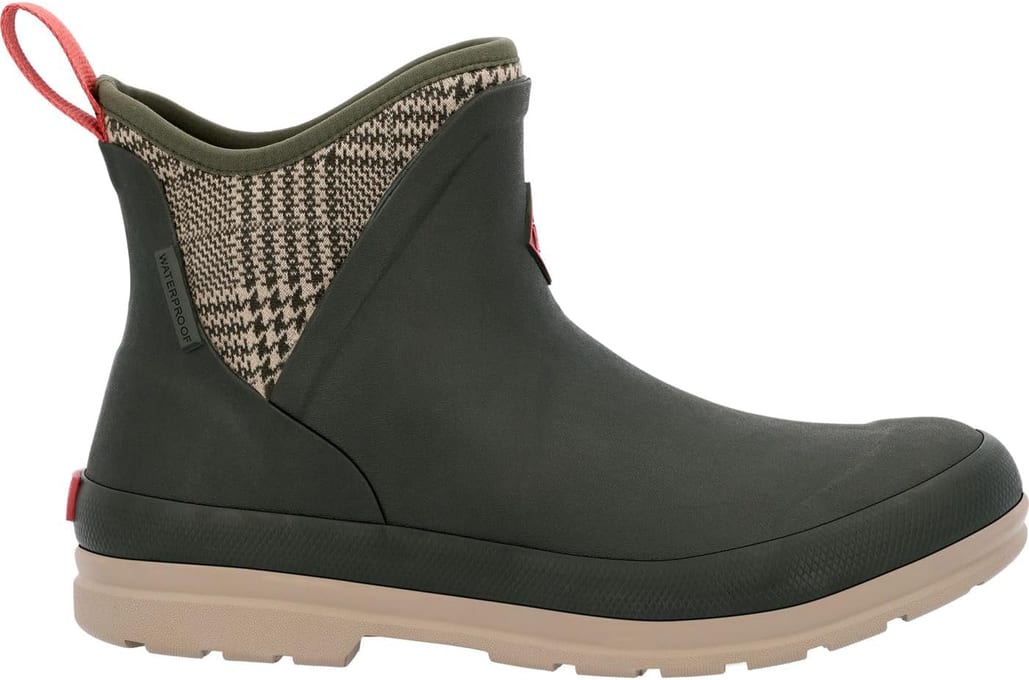
The boot most people asking this question should actually buy. Muck's stretch-fit neoprene bootie sits inside a hand-laid rubber shell, so it wears like a slipper and seals like a farm boot, and the ankle height is the one you will reach for on an ordinary wet day rather than saving for chores. Over two thousand owners back it up. It is the clearest demonstration of what Muck does better than Bogs: comfort you notice after the third hour.
Pros
- Neoprene bootie is genuinely comfortable all day
- Completely waterproof rubber-and-neoprene build
- Ankle height suits everyday wear
Cons
- Less coverage than a tall boot
- Utilitarian look
Best Bogs, and best for on and off
Bogs Men's Classic Ultra High
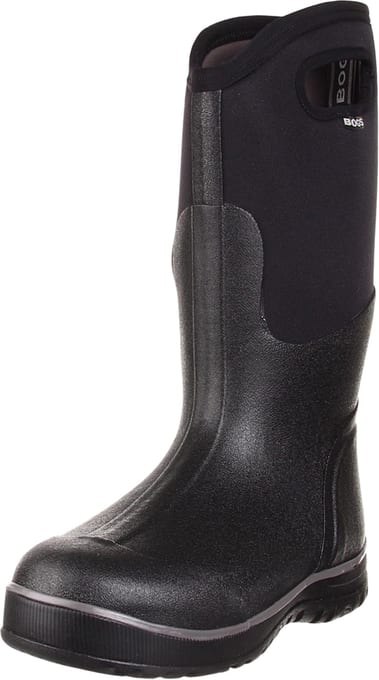
The clearest case for Bogs over Muck. The tall shaft holds its shape when you step out of it, and the built-in pull handles mean you are not wrestling a collapsed boot at the back door, which is exactly the friction Muck's softer neoprene collar creates. Insulated, fully waterproof, and tall enough for deep standing water. Buy this if you take your boots on and off a dozen times a day.
Pros
- Pull handles make on and off genuinely easy
- Holds its shape when stored
- Tall coverage for deep water
Cons
- Firmer shell gives less across the instep
- Heavier than an ankle boot
Best for deep cold
Muck Arctic Sport
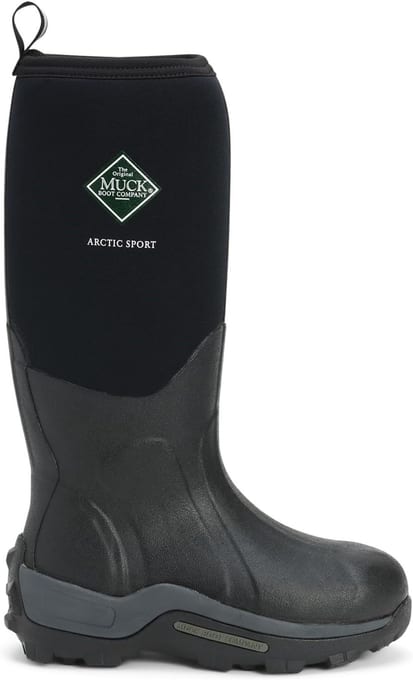
Where Muck pulls clearly ahead. A 5mm neoprene layer, roughly double what most rain boots carry, plus a tall rubber overlay and an aggressive outsole built for frozen ground. This is the boot for standing still outdoors in genuine winter, which is the job an uninsulated welly fails worst. Overkill for a rainy commute, and warm enough to be uncomfortable above about 50F.
Pros
- 5mm neoprene handles genuine winter cold
- Aggressive outsole grips frozen ground
- Tall, fully waterproof shell
Cons
- Too warm for mild weather
- Heavy
Best for work sites
Bogs Workman
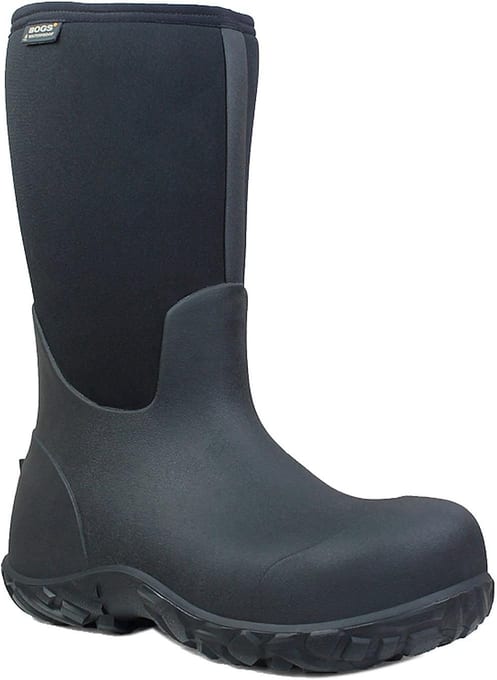
Bogs' answer to the comfort argument, and it largely works. The Workman adds real underfoot support and a stiffer, more supportive midsole than the Classic line, which is what a rubber boot usually lacks when you are on gravel or concrete for a shift. Still fully waterproof, still easy to pull on. The pick if you need a rubber boot that behaves like a work boot rather than a welly.
Pros
- Genuine underfoot support for long shifts
- Easy pull-on with a firm shell
- Built for gravel and concrete
Cons
- Heavier and stiffer than the Classic
- Overbuilt for casual wear
Also worth considering
Strong, well-reviewed shoes that just missed our ranked list - worth a look if the picks above aren't quite right for you.
- Muck Boot Chore Classic - The model most people picture when they hear Muck: a tall rubber work boot with a reinforced toe and shin, and the brand's longest-running design. Check the size and colour listing carefully, as availability moves around.
- Bogs Classic High - The shorter sibling of the Ultra High, at mid-calf rather than knee height. Easier to walk in and less boot to store, with the same pull handles and the same insulation.
- Bogs Amanda II Chelsea - Bogs at its least agricultural: a soft rubber chelsea with elastic gores and a cushioned footbed, in colours that suit a school run rather than a barn.
Frequently asked questions
Are Muck boots better than Bogs?
Neither is better outright, and anyone who tells you otherwise is picking one use case. Muck wraps your foot in a stretch-fit neoprene bootie, so it is the more comfortable boot for long wear and the better seal against cold water. Bogs uses a firmer shell with pull-on handles, so it is far easier to get on and off and it holds its shape when you step out of it. If you will wear the boot for hours, lean Muck. If you pull it on and off all day between the house and the yard, lean Bogs.
Which brand is warmer?
Muck, at the top of the range. Both brands insulate with neoprene, but Muck's cold-weather models use a thicker 5mm layer and publish temperature ratings well below freezing, while most Bogs models sit in the comfortable-in-frost band rather than the deep-cold one. Bogs does insulate its Classic and Ultra High lines properly, so the gap only really opens up once you are standing still in genuine winter. For a wet autumn commute the difference is academic.
Do Bogs and Muck boots run true to size?
Both run roughly true, with one important difference in how they fit. Muck's neoprene stretches, so it accommodates a wider foot and a thick sock more forgivingly, and half sizes usually mean sizing down. Bogs holds a fixed shape, which makes for an easier pull-on but less give across the instep. If you are between sizes in Bogs, most owners size up and wear a thicker sock rather than fighting a snug fit.
Which one is more comfortable for standing all day?
Muck, for most people. The neoprene bootie distributes pressure rather than concentrating it at the heel and instep the way a rigid rubber shell does, and the models built for work add a cushioned footbed on top. Bogs closes the gap with its Workman line, which is built for exactly this and adds real underfoot support. Either brand beats a plain moulded welly by a wide margin.
How long do Bogs and Muck boots last?
Several seasons of regular use from either, with the same failure points. Both are hand-laid rubber over a neoprene core, and both eventually crack at the instep flex point rather than leaking through the sole. Heat and sun are what kill them, so store them out of direct sunlight and away from radiators, rinse off road salt, and do not fold them. Owners routinely report five years or more from both brands with that basic care.
Are they worth the price over a cheap rubber welly?
For waterproofing alone, no. A twenty-dollar moulded welly keeps your feet exactly as dry, because a seamless rubber boot is waterproof by construction. What you are buying from either brand is comfort over hours, insulation, and a boot that survives real work rather than occasional rain. If the boot lives by the door for downpours, save your money. If you are in it for a shift, both are worth it.